
Lithodytes lineatus
—
Painted Antnest Frog
Also known as:
Gold-striped Frog, Amazon Ant Nest Frog, Amazonian Ant Frog
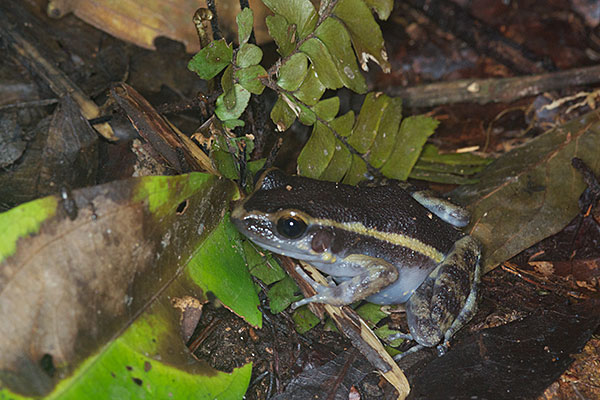
Youngsters of this ant-eating specialist look very similar to some of the poison frog species such as Ameerega hahneli. But full-grown adults like this one are easy to recognize; they are significantly larger than the poison frogs in this area, and they are somewhat rounder and less angular.
Here is a complete list of the herps I saw in the wild on my 2013 MT Amazon Expeditions trip.
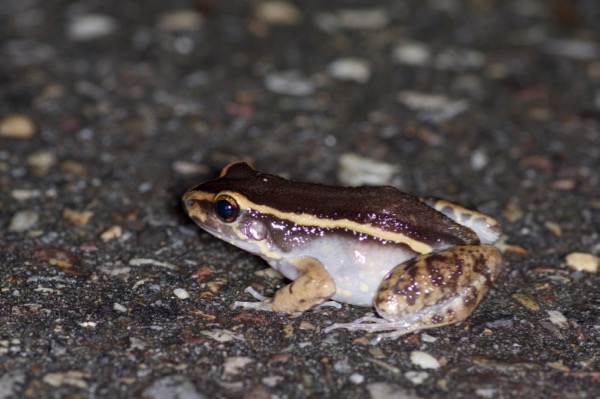
This was a particularly gigantic adult, nearly three inches long. It didn't really look like a poison frog at all. Maybe one of these years I'll actually get a photo of a youngster to illustrate the claim that they look like poison frogs.
My Travelogues and Trip Lists page includes a complete list of the herps I saw in the wild on my 2016 MT Amazon Expeditions trip.
Printed references:
- Bartlett, R.D., and Bartlett, P. 2003. Reptiles and Amphibians of the Amazon: An Ecotourist's Guide
- Duellman, W.E. 2005. Cusco Amazónico: The Lives of Amphibians and Reptiles in an Amazonian Rainforest
- Rodríguez, L. O. and Duellman, W. E. 1994. Guide to the Frogs of the Iquitos Region, Amazonian Peru