
Thamnophis elegans
—
Terrestrial Gartersnake
Also known as:
Western Terrestrial Gartersnake, Western Terrestrial Garter Snake
Subspecies I've seen:
T. e. elegans
Mountain Gartersnake
T. e. terrestris
Coast Gartersnake
T. e. vagrans
Wandering Gartersnake
Thamnophis elegans elegans
—
Mountain Gartersnake
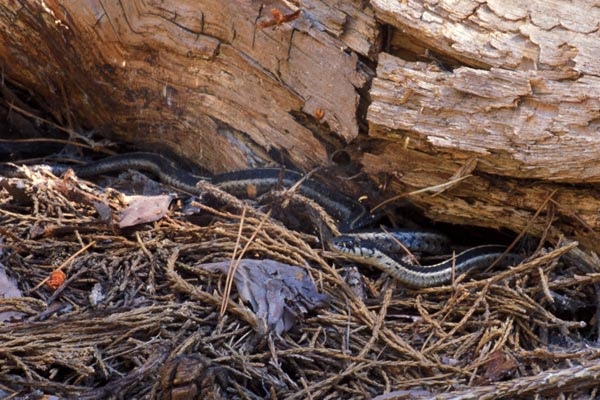
My wife and I hopped out of the car for a quick look at the giant General Grant Tree, the "Nation's Christmas Tree". This snake was admiring the tourist crowds from its resting place at the base of one of the General Grant Tree's tree neighbors.
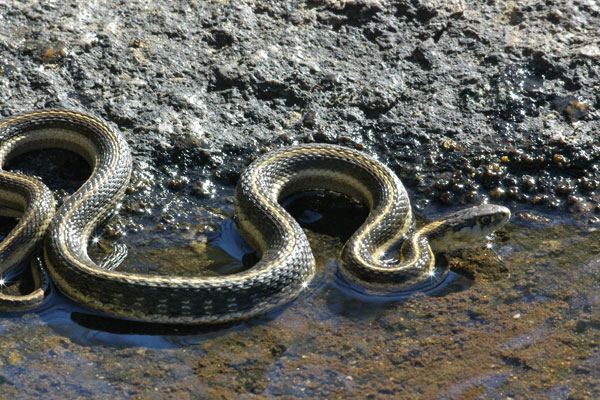
My friend Fred Harer found this large adult Mountain Gartersnake just a few feet away from a smaller Sierra Gartersnake, both in a beautiful mountain pond.
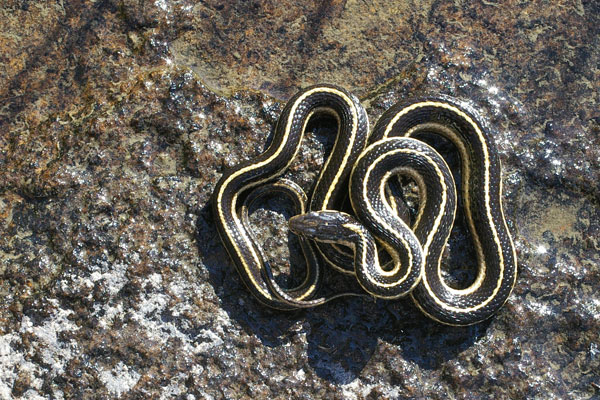
My wife and I were driving across Tioga Pass heading slowly homeward after a nice long weekend, when we passed some irresistible ponds. A few minutes poking around the edges of the first pond revealed this adult Mountain Gartersnake, which resisted my attempts to photograph it for quite awhile, but eventually settled down for long enough to get a few shots from above.
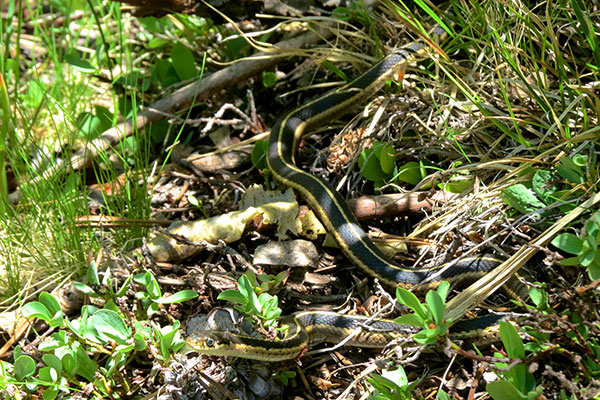
Nearly eight years later, we were in the same area on a warm summer day so I insisted we spend a few minutes checking whether the local gartersnake population was still hanging in there. They seem to be doing just fine; I saw a few as they raced off into the water, and this one that sat still for awhile.
Thamnophis elegans terrestris
—
Coast Gartersnake
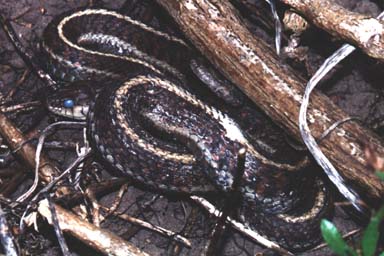
This snake was probably on the verge of shedding its skin, hence the blue eyes.
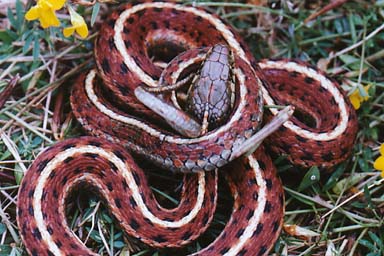
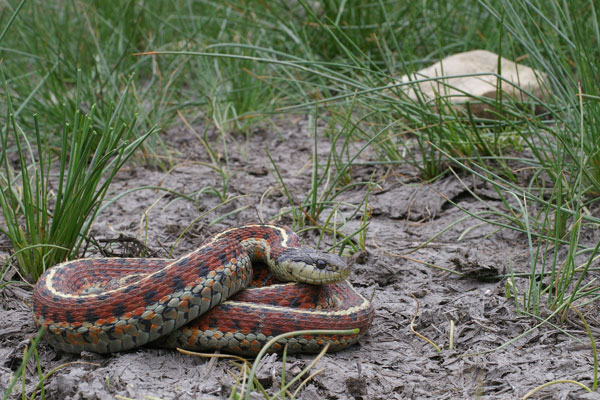
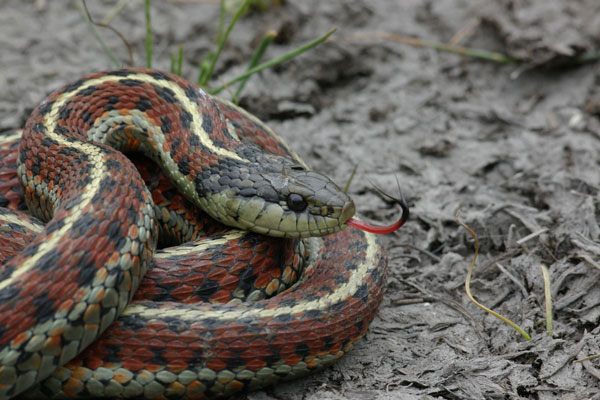
This snake was much redder than any of the numerous others we saw or any illustration in my reference books.
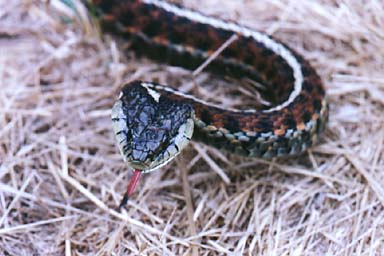
This snake was only a couple of yards away from where the previous one had been three weeks earlier, and might be the same one with recently shed skin. It bit me rather enthusiastically and then flattened its head as seen here (to look like a viper?).
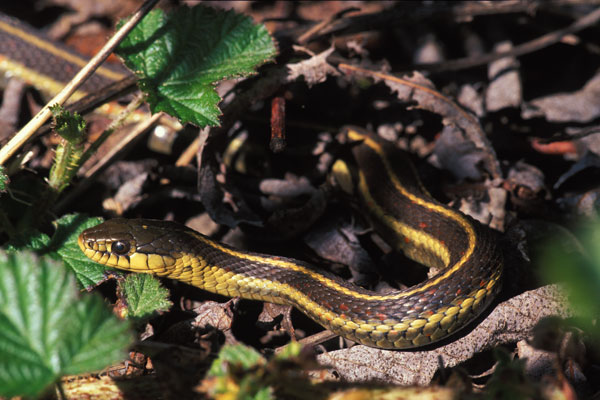
Here is one of the twenty count 'em twenty sunning Coast Gartersnakes I saw along the trail on this fine day, along with five California Alligator Lizards. That's the most snakes I've seen in the wild on a single day.
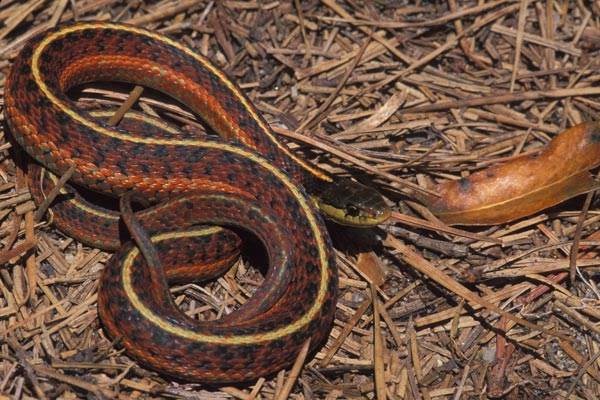
This is the second extremely red individual of this species I've come across, out of hundreds of sightings.
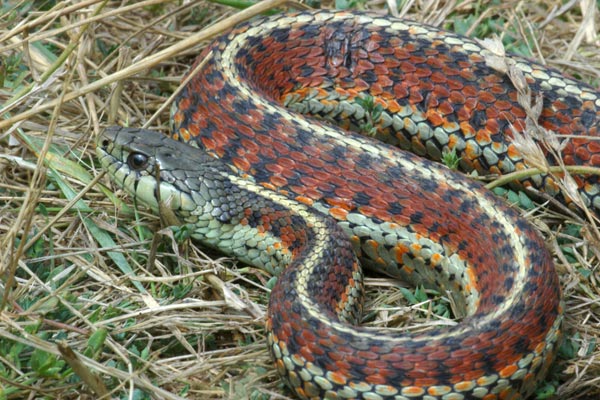
And here's the third extremely red individual of this species I've come across. This was a particularly large and fat gartersnake. I saw it sluggishly slithering away from a pond where I almost always find the endangered California Red-legged Frog. It spat up water twice while I was watching it. Something tells me that it was not respecting the endangered status of these frogs.
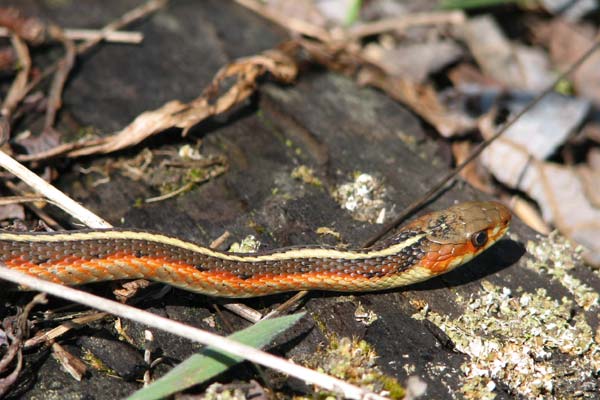
Since we were up in the neighborhood of the coast redwoods, and the afternoon was sunny, we stopped by the nature trail at the visitor center where we had seen a bunch of gartersnakes a couple of years earlier. It was a cooler day than the last time we visited, but we still came across three gartersnakes in a few minutes.
I had originally identified this one as a Coast Gartersnake due to the red suffusion on the sides, but Jim Taylor sent email suggesting that the red on the head and seven upper labial scales were good evidence that this snake was really T. s. infernalis, albeit one with an aberrant pattern.
I asked for other opinions on FieldHerpForum.com, and everyone there was quite certain that it was a Coast gartersnake after all. Coast garters usually have eight upper labial scales, but sometimes they have seven. And they usually don't have red on the head, but occasionally they do. So this one was atypical for a Coast garter, but a Coast garter it was.
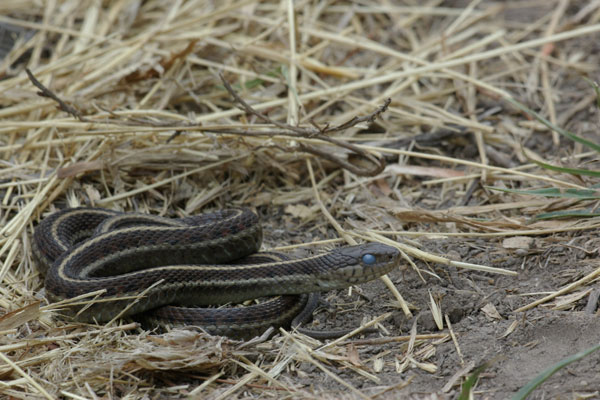
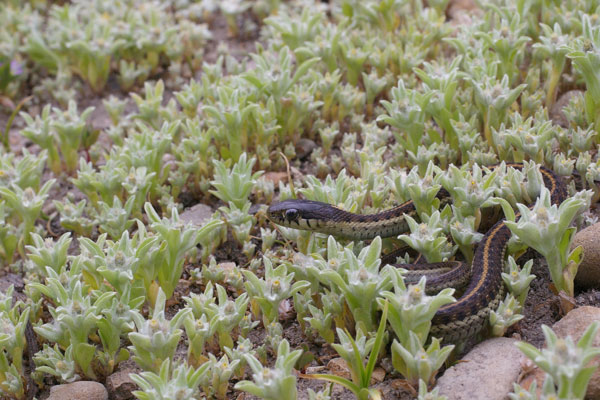
My friends Fred and Angie Harer and I were primarily looking for San Francisco gartersnakes to photograph, but an assortment of photogenic Coast garters just couldn't resist posing for our cameras as well. The first one pictured here is a juvenile with the blue opaque eyes that are a telltale sign of a snake on the brink of shedding its skin. The second one is a tiny baby, just four or five inches long. And the last two photos are of a huge battle-scarred veteran.
Thamnophis elegans vagrans
—
Wandering Gartersnake
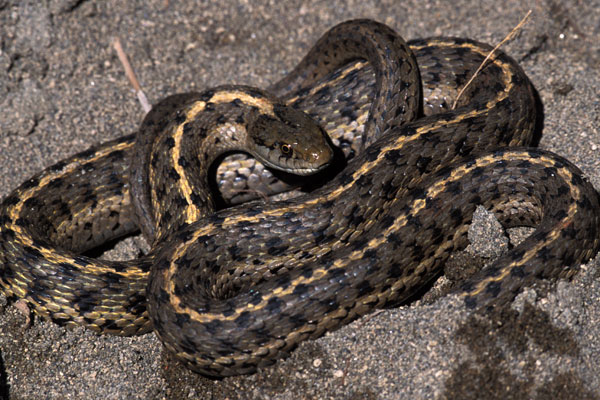
Smith Rock State Park was one of my favorite places in Oregon. It has a gorgeous river winding through towering rocks full of raptors. It's mostly visited by rock climbers, but it proved to be good for herpers as well. In addition to this pretty gartersnake, we saw a whipsnake, several fence lizards, and some tadpoles in a couple of hours.
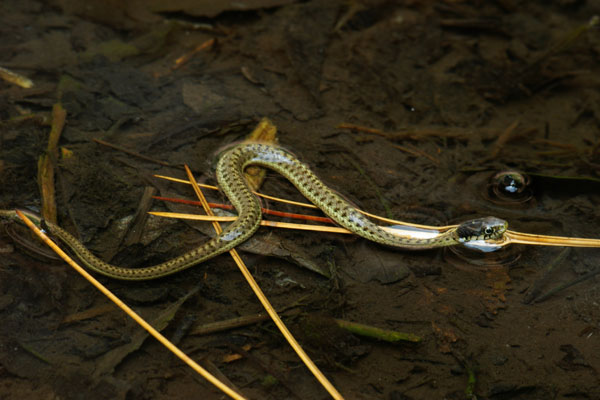
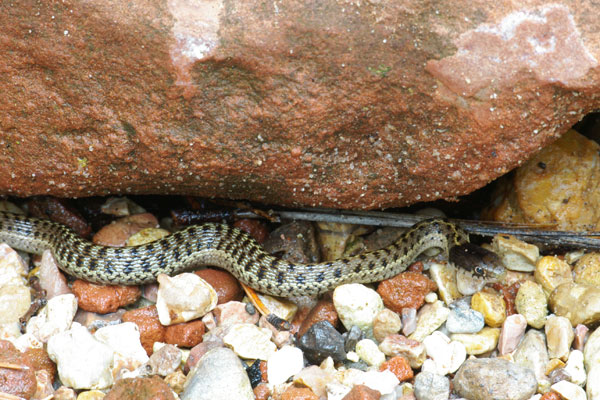
These are both young gartersnakes. The one pictured at top was very small, perhaps about five inches long. The one pictured below was a little larger, but no more than eight inches long. Both of them were hunting tasty fish and tadpoles in calm areas of Oak Creek Canyon.
I had originally identified these as Thamnophis cyrtopis, Black-necked Gartersnakes, which do live in this area and do have (surprise!) black necks similar to what you see here. But a gartersnake breeder from Holland, Steven Bol, informed me that these look just like young T. elegans. I did some further investigation and realized he was right.
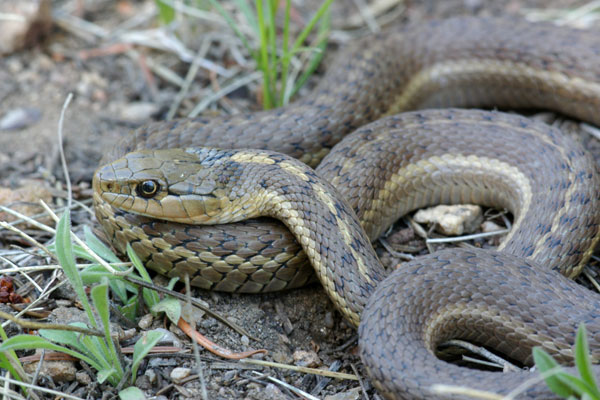
This is by far the most commonly seen type of snake in Colorado, at least in May, at least if my experience is anything near typical. In a month spent in Colorado I ended up seeing 19 snakes, of which 19 were T. e. vagrans.
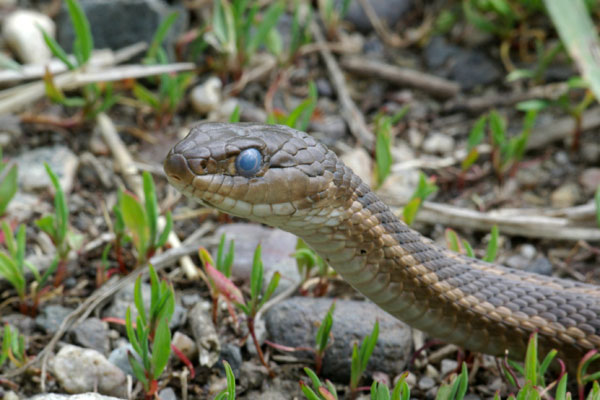
This large adult gartersnake was on the verge of shedding its skin, which is what causes the blue contact lens look. I was pleasantly surprised to discover that Steamboat Springs, at an elevation of about 8000 feet, was a hotbed of gartersnake activity in mid-May.
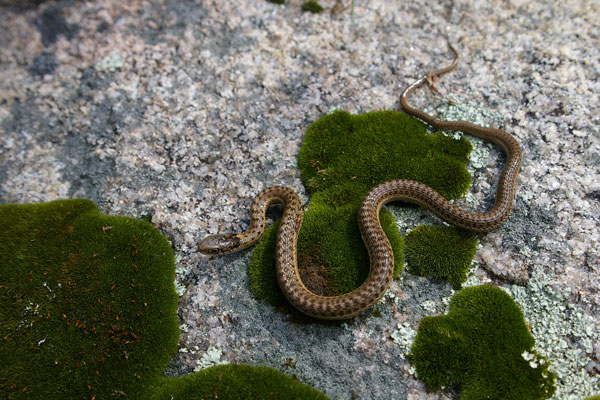
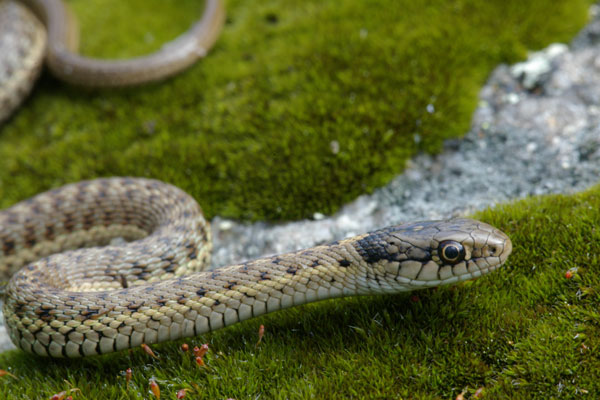
These two photos are of the same young gartersnake. The young ones I saw around Colorado were generally more distinctively patterned than the adults, and with much darker heads. This initially fooled me into thinking that they were a different species, but at the elevation of greater than 8000 feet here in northwestern Colorado, T. e. vagrans is really the only possibility, so that clarified the identity of similar-looking young 'uns that I had seen earlier.
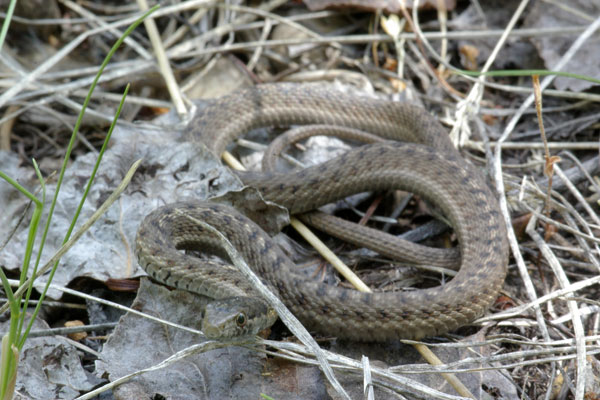
I had one afternoon to explore that part of Great Basin National Park that could be reached on foot from the Upper Lehman Creek campground, at an elevation of about 7,800 feet. The forest looked like sagebrush lizard habitat. I had seen a lot of sagebrush lizards in recent days, and not many other herps, so I told my wife that my goal was to find at least one herp that wasn't a sagebrush lizard. Four hours of hiking later, I had seen twenty sagebrush lizards, and this one small snake.
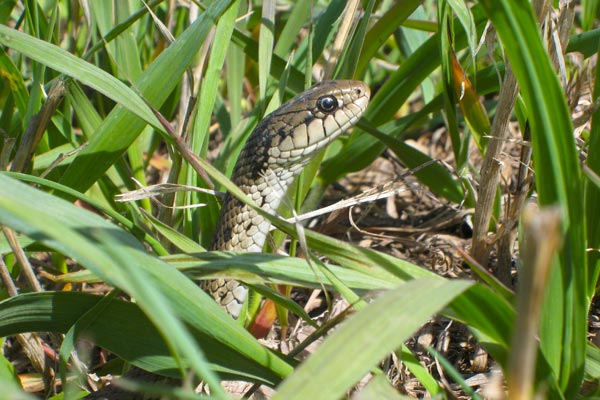
We came across this snake while taking our dogs for their daily 4-mile walk around the Niwot Loop. It let me approach very closely to get this shot on a small digital point-and-shoot camera.
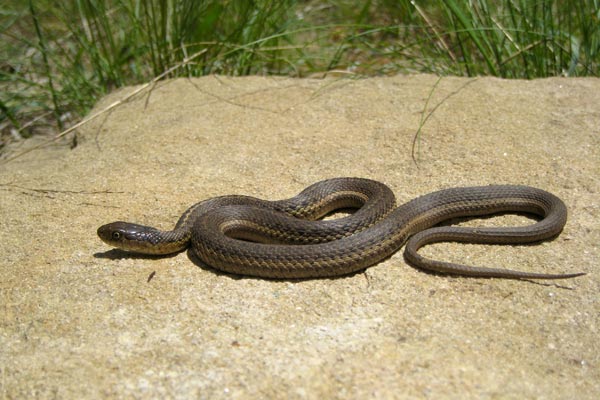
This plain li'l gartersnake was my first photographed New Mexico snake.
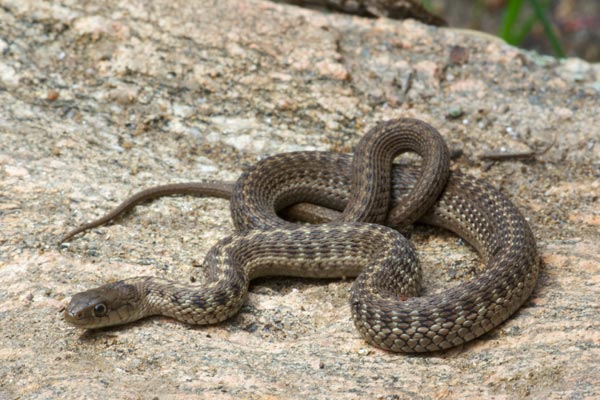
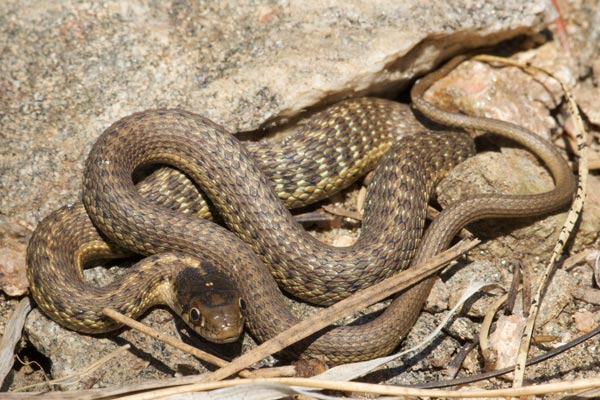
And here are my second and third photographed New Mexico snakes. Look familiar? The good news is, on the rest of this New Mexico trip I saw a wide variety of snakes, and none of the rest were Thamnophis elegans vagrans.
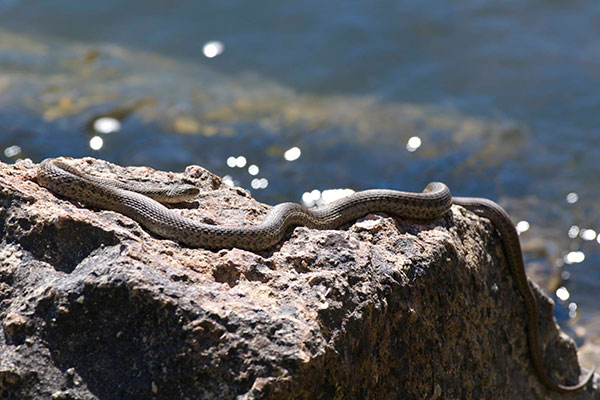
This large gartersnake was basking and/or hunting on a rock protruding from the Smith river, a few feet from the shore.
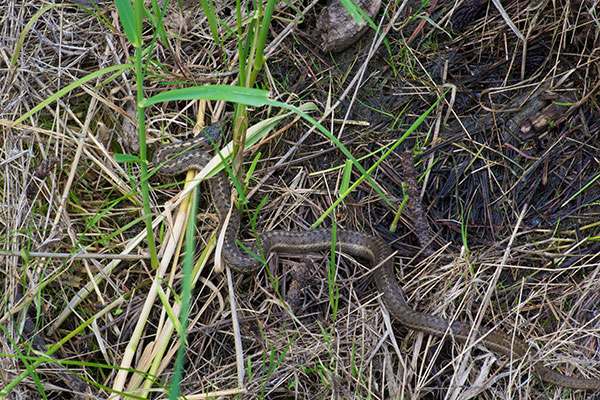
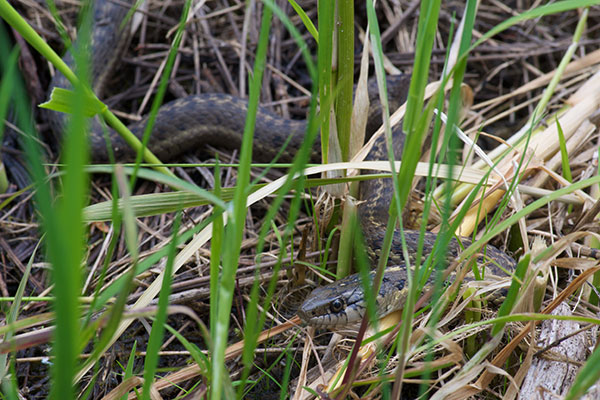
I saw a few of these fairly drab gartersnakes patrolling the edges of a pond. This particular one was a reasonably large adult with a reasonably full belly.
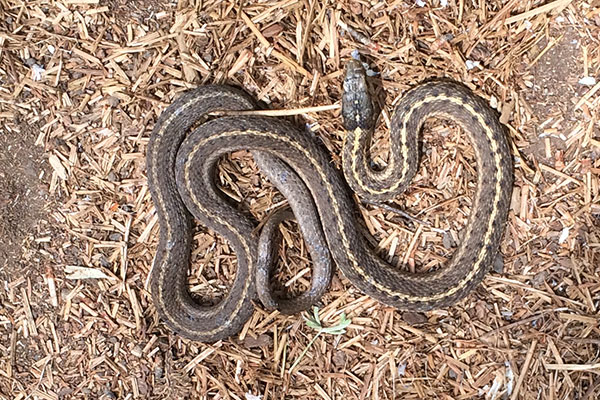
Another generic individual, detained briefly for a quick iPhone photo.
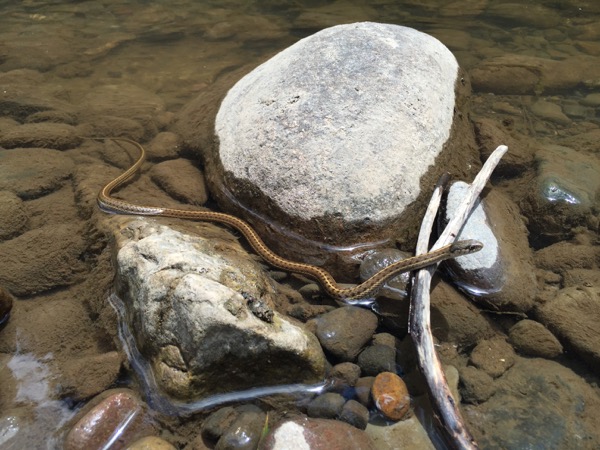
A nicely marked youngster, posing nicely. Nice!
Printed references:
- Bartlett, R. D., Tennant, A. 2000. Snakes of North America, Western Region
- Basey, H. E. 1976. Discovering Sierra Reptiles and Amphibians
- Behler, J. L., King, F. W. 1979. The Audubon Society Field Guide to North American Reptiles & Amphibians
- Brown, P. R. 1997. A Field Guide to Snakes of California
- Conant, R., Collins, J. T. 1998. Peterson Field Guide to Reptiles and Amphibians of Eastern and Central North America, Third Edition, expanded
- Crother, B. I. (ed.) 2017. Scientific and Standard English Names of Amphibians and Reptiles of North America North of Mexico, with Comments Regarding Confidence in Our Understanding, Eighth Edition
- Degenhardt, W. G., Painter, C. W., Price, A. H. 1996. Amphibians & Reptiles of New Mexico
- Henson, P., Usner, D. J. 1993. The Natural History of Big Sur
- Schoenherr, A. A. 1992. A Natural History of California
- Shedd, J. D. 2005. Amphibians and Reptiles of Bidwell Park
- Smith, H. M., Brodie, E. D. Jr. 1982. Reptiles of North America: A Guide to Field Identification
- Stebbins, R. C. 2003. Peterson Field Guide to Western Reptiles and Amphibians, Third Edition
- Storm, R. M., Leonard, W. P. 1995. Reptiles of Washington and Oregon
- Wauer, R. H. 1964. Reptiles and Amphibians of Zion National Park