
Coluber constrictor
—
North American Racer
Also known as:
Racer, Eastern Racer
Subspecies I've seen:
C. c. constrictor
Northern Black Racer
C. c. flaviventris
Eastern Yellow-bellied Racer
C. c. mormon
Western Yellow-bellied Racer
C. c. paludicola
Everglades Racer
C. c. priapus
Southern Black Racer
Coluber constrictor constrictor
—
Northern Black Racer
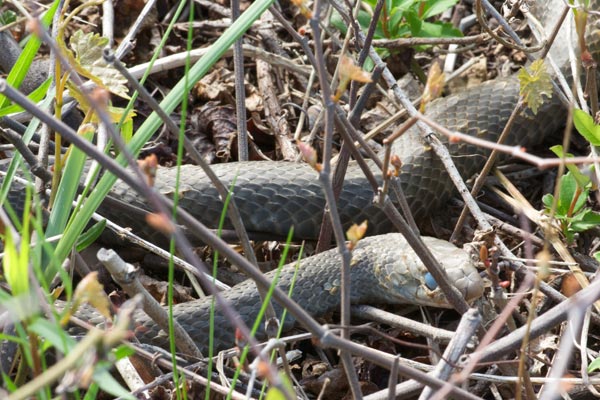
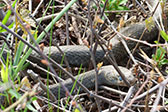
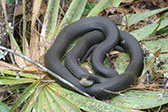
This was the first snake I came across in our stay on the Outer Banks. It is clearly on the verge of shedding its skin, which makes it nearly patternless and hard to recognize. I'm pretty certain it's Coluber constrictor based on comparison with the various snakes in this area.
Coluber constrictor flaviventris
—
Eastern Yellow-bellied Racer
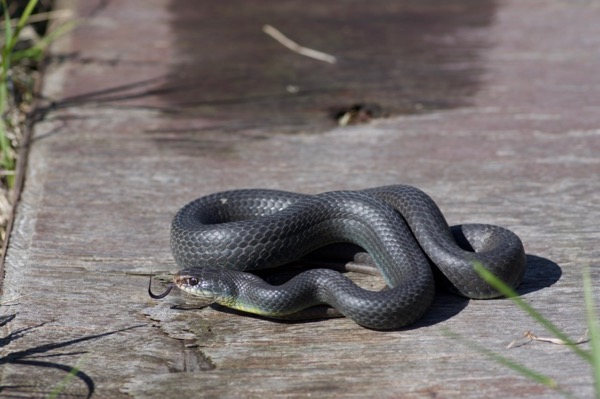
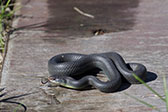
A a pile of Western Ratsnakes under a board also included this lone racer. It probably hoped we would ignore it amongst all of the similar-looking ratsnakes. But we noticed it anyway, and unlike the ratsnakes, it posed reasonably well on top of another nearby board.
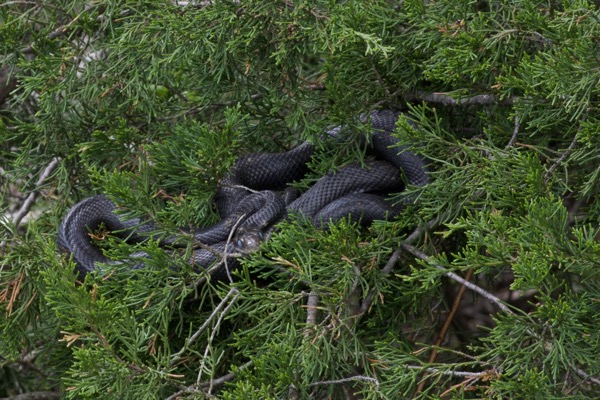
While a group of us led by local herper Court Gaverth were mostly looking for Timber Rattlesnakes, someone noticed this ready-to-shed (note the blue eyes) racer hanging out in a nearby tree.
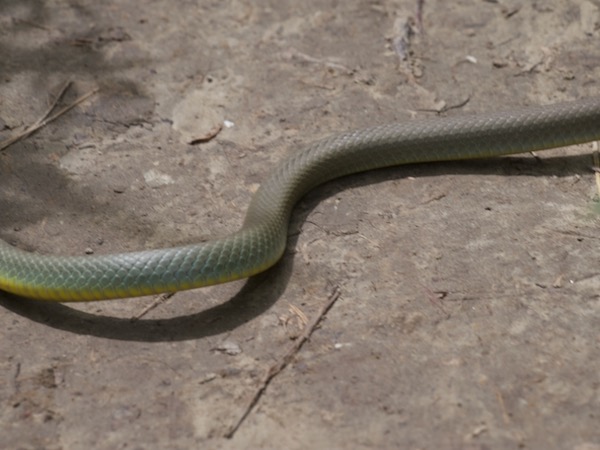
Perhaps not the finest photograph of a snake that I have ever taken, but definitely the finest photograph of this particular snake that I have ever taken.
Coluber constrictor mormon
—
Western Yellow-bellied Racer
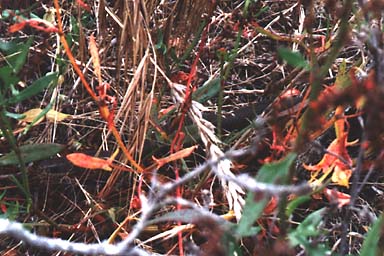
Amongst the numerous gartersnakes at Pescadero Marsh are many of these racers, none of whom want to sit still to have their picture taken. There really is a snake in this picture. Really.
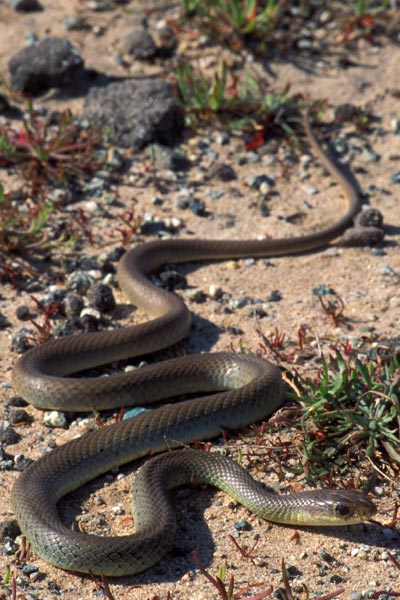
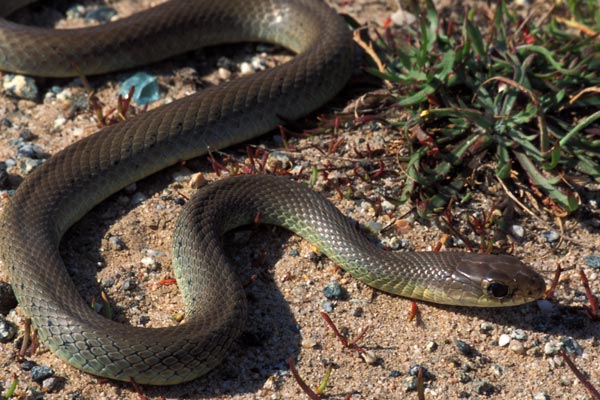
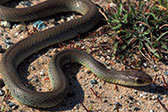
In contrast to the extremely secretive Pescadero Marsh racers, this one may have been the most cooperative photography model in the history of the species. It was splayed out in a nice sinuous S-curve in the late afternoon, fully exposed. I walked past it without even noticing it. Our dog Max actually walked unaware through its coils, which apparently disturbed it enough that my wife saw it move slightly. Then it just lay there looking all snakey for us.
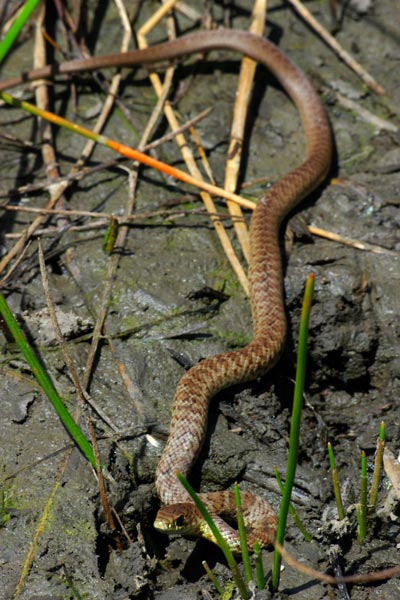
Though adult racers are generally solid-colored, the young ones display a prominent pattern. This snake is on the verge of adulthood; its markings are visible but have mostly faded.
Coluber constrictor paludicola
—
Everglades Racer
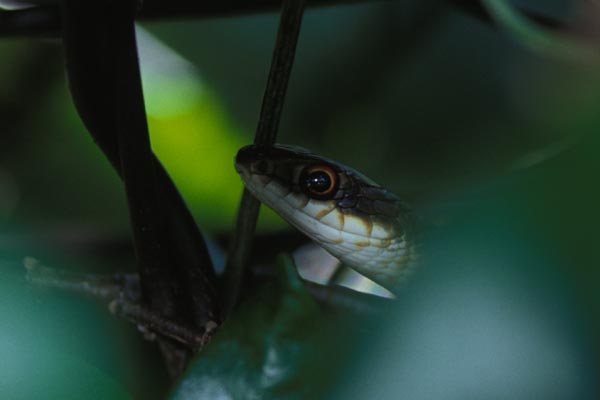
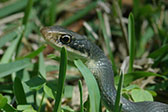
This elegant dark gray snake was sunning itself on a rock wall when I first noticed it. It then noticed me, and climbed up into some vegetation to hide. Unlike its yellow-bellied cousins, it didn't race off; once it was concealed in the bushes, it stayed motionless.
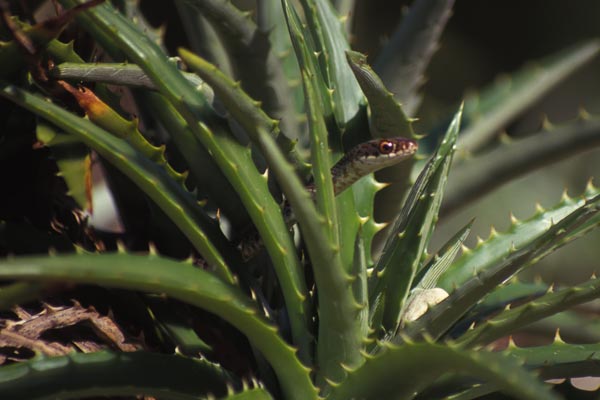
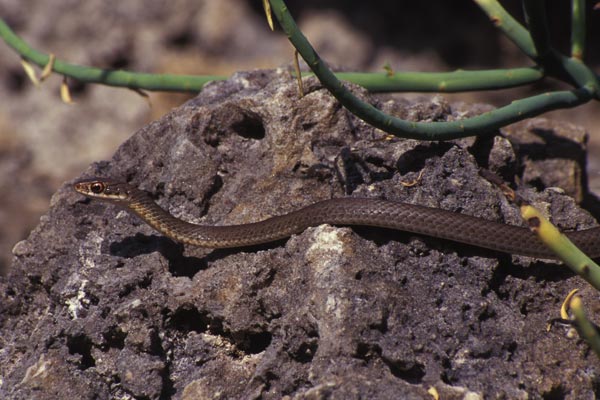
I discovered three of these small stealthy snakes in the cactus garden section of Fairchild Tropical Gardens. They have distinctive large, orange eyes.
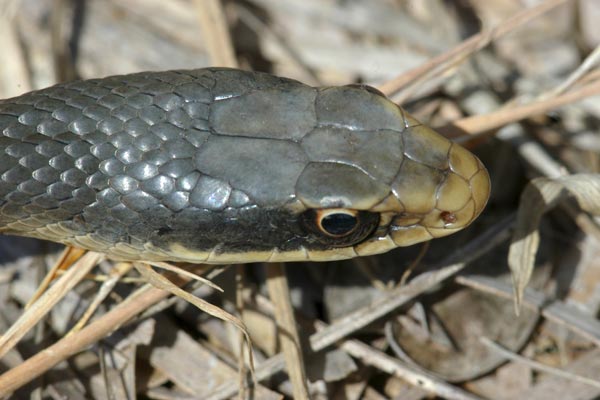
The range of the Everglades Racer is the southern end of Florida including the Florida Keys, but also a small area around Merritt Island and Cape Canaveral on the east coast of central Florida. The racers in the rest of Florida are considered to be a different subspecies, the Southern Black Racer. The differences between the two subspecies are very subtle (Everglades Racers aren't usually as dark, their chins are usually less white, and their eyes are usually yellowish rather than orangish or reddish), so it seems likely that this division might be artificial.
This snake was prowling around in the sand scrub in mid-afternoon on a chilly day.
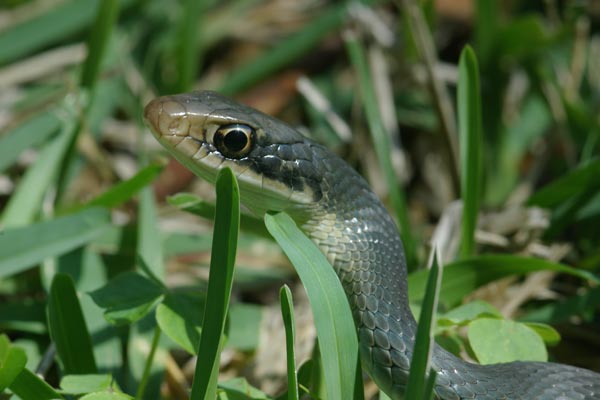
Racers aren't averse to a little suburban living. This one was inspecting the grass in my mother-in-law's backyard, probably looking for Brown Anoles to devour.
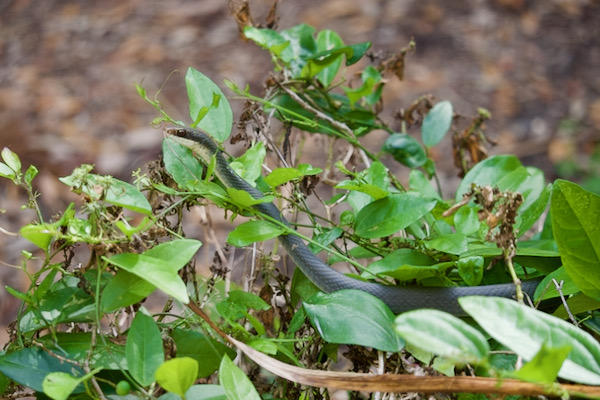
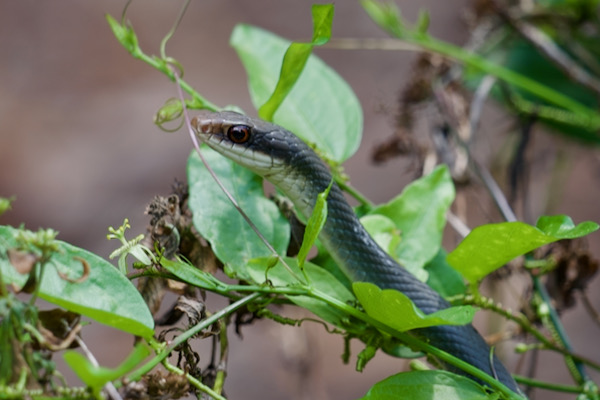
This large racer was as chill as any I've ever seen. Normally they disappear long before they let you get this close.
Coluber constrictor priapus
—
Southern Black Racer
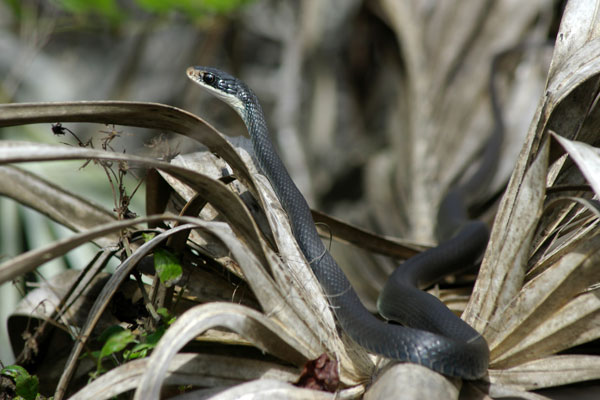
The good thing about finding racers on coolish days in late summer or early spring is that they might just bask, rather than speeding off in an instant as they tend to do on warmer days. This one was right up at eye level a few feet off of the boardwalk at Smyrna Dunes.
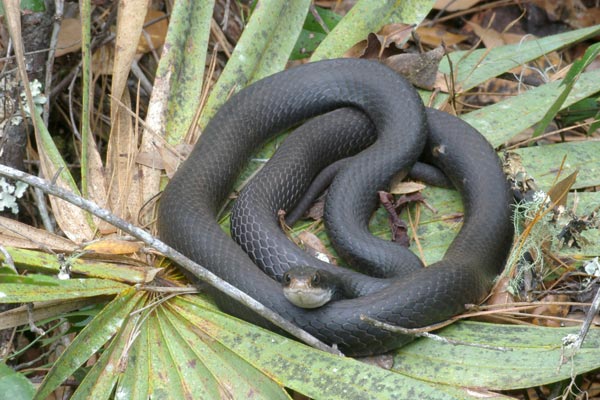
Speaking of racers basking on coolish days, this very cooperative snake held its position despite the tremendous amount of crashing about in the thick palmetto bushes that I found necessary in order to get my tripod into a decent position. Dr. Terry Farrell found this snake while he, Dr. Peter May, and I spent a fine day herping in Ocala National Forest.
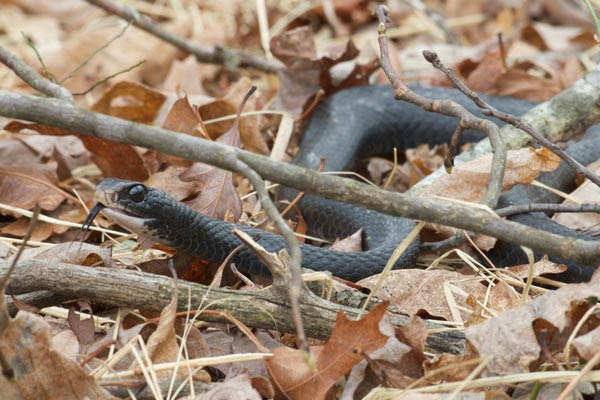
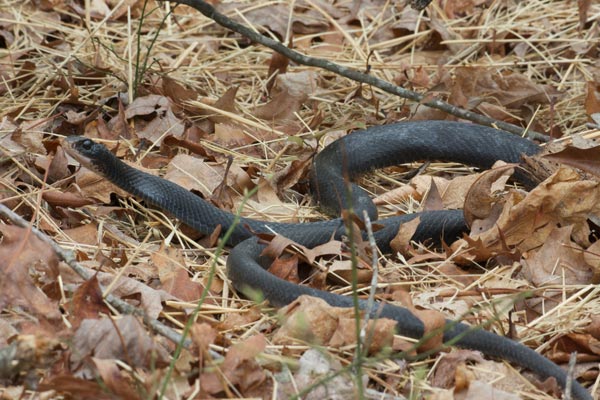
Racers are among the most easily seen snakes in much of the country, so they are generally not considered particularly exciting. However, after an entire snake-free week across various states I was more than happy to come across this impressive individual. It hung around much longer than typical for a racer before rapidly escaping across the forest floor.
Printed references:
- Ashton, R. E. Jr., Ashton, P. S. 1988. Handbook of Reptiles and Amphibians of Florida, Part One: The Snakes, Second Edition
- Bartlett, R. D., Tennant, A. 2000. Snakes of North America, Western Region
- Basey, H. E. 1976. Discovering Sierra Reptiles and Amphibians
- Behler, J. L., King, F. W. 1979. The Audubon Society Field Guide to North American Reptiles & Amphibians
- Brown, P. R. 1997. A Field Guide to Snakes of California
- Carmichael, P., Williams, W. 1991. Florida's Fabulous Reptiles & Amphibians
- Conant, R., Collins, J. T. 1998. Peterson Field Guide to Reptiles and Amphibians of Eastern and Central North America, Third Edition, expanded
- Crother, B. I. (ed.) 2017. Scientific and Standard English Names of Amphibians and Reptiles of North America North of Mexico, with Comments Regarding Confidence in Our Understanding, Eighth Edition
- Degenhardt, W. G., Painter, C. W., Price, A. H. 1996. Amphibians & Reptiles of New Mexico
- Henson, P., Usner, D. J. 1993. The Natural History of Big Sur
- Schoenherr, A. A. 1992. A Natural History of California
- Shedd, J. D. 2005. Amphibians and Reptiles of Bidwell Park
- Smith, H. M., Brodie, E. D. Jr. 1982. Reptiles of North America: A Guide to Field Identification
- Stebbins, R. C. 2003. Peterson Field Guide to Western Reptiles and Amphibians, Third Edition
- Stoops, E. D., Wright, A. 1997. Snakes and other Reptiles of the Southwest, 4th Edition
- Tennant, A. 1997. A Field Guide to Snakes of Florida